

How to Choose the Right Daycare in Concord: A Parent's Guide
 How to Choose the Right Daycare in Concord: A Parent's Guide

A neutral, practical guide to comparing child care options in Concord and Contra Costa County, from license checks and ratios to the questions worth asking on a tour.
A neutral, practical guide to comparing child care options in Concord and Contra Costa County, from license checks and ratios to the questions worth asking on a tour.
Choosing a daycare is one of the biggest decisions you will make as a parent, and in Concord you have real options: licensed centers, licensed family child care homes, preschool programs and school-district TK. This guide walks through how to compare them without the sales pitch.
Most licensed care in Contra Costa County falls into two categories, and each suits different families.
Centers operate in commercial or school-style buildings with multiple classrooms grouped by age. They tend to have more staff, set curricula, longer operating hours and backup coverage when a teacher is sick. They are licensed by the California Department of Social Services as "Child Care Centers".
A provider cares for children in their own home. Small FCCHs serve up to eight children and large FCCHs up to 14, depending on the children’s ages and how many adults are present. Homes often offer mixed ages together, a cozier setting and sometimes more flexible hours. Quality varies widely, exactly as it does with centers.
Every child care center and family child care home in California that serves more than one family must be licensed. Before you tour anywhere, look the provider up.
A citation or two over many years is normal. A pattern of repeated serious citations, or a provider who cannot be found in the database at all, is not.
California Title 22 sets the minimum number of adults per child in licensed centers. Lower numbers mean more attention for each child. Ask any program what their actual ratios are, not just the legal minimum.
| Age group | Teacher : children | With an aide |
|---|---|---|
| Infants (under 2) | 1 : 4 | — |
| Toddlers (18–30 months, toddler option) | 1 : 6 | — |
| Preschool (2–5) | 1 : 12 | 1 : 15 (teacher + aide) |
| School-age (5–12) | 1 : 14 | 1 : 28 (teacher + aide) |
| Large family child care home | Up to 14 children, depending on ages and staffing | |
Source: California Code of Regulations, Title 22, Division 12, including section 101216.3 (preschool ratios). Family child care home capacity is described on the CDSS parent resources page. Verify current ratios at cdss.ca.gov, as regulations are updated periodically.
A website and a license tell you a program is allowed to operate. A tour tells you whether you would want your child there. Visit during normal hours, ideally mid-morning when children are active.
Child care in the Bay Area is expensive, and infant care is the most expensive of all. Before you rule out a program on price, check whether you qualify for help:
Not every provider accepts subsidies. Ask up front. We cover the details in our financial assistance guide.
Tour at least two or three programs so you have a basis for comparison. Bring the same list of questions to each. Then weigh the things that matter most to your family, usually some mix of warmth, safety, learning approach, hours, location and cost. There is no single best daycare in Concord, only the best one for your child.
After the tour
Go back to the CCLD facility search and re-read the inspection report with what you saw in mind. Then call one or two current parents if the program will connect you.
We are one of the licensed centers you might tour. Super Kidz Club is a Black-owned, woman-owned, LGBTQ+ friendly center at 2140 Minert Rd in Concord serving infants through age 12, with a Reggio-inspired, play-based approach. We accept CoCoKids and CalWORKs and offer a sibling discount. We are happy to answer your questions and show you our classrooms in action. Schedule a tour whenever you are ready.
Short answers to the questions parents ask most while comparing daycares in Concord.
Tour Super Kidz ClubSearch the facility by name or zip code at the California Community Care Licensing Care Facility Search (ccld.dss.ca.gov). The record shows license status, capacity, inspection reports and any citations.
Under Title 22, licensed centers must maintain at least 1:4 for infants, 1:6 for toddlers, 1:12 for preschool (1:15 with an aide) and 1:14 for school-age (1:28 with an aide). Many programs staff better than the minimum.
Neither is better across the board. Centers usually offer more structure, staff and hours; licensed family child care homes offer smaller, mixed-age, home-like settings. Visit both and choose the fit for your child.
Ask to see the license and inspection report, actual ratios, staff tenure, sick policy, daily schedule, outdoor time, communication with parents, hours and holidays, what tuition includes and whether subsidies are accepted.
Costs vary by age and type of care, with infant care the highest. CoCoKids and CalWORKs subsidies, Dependent Care FSAs and tax credits can substantially lower the cost for eligible families.
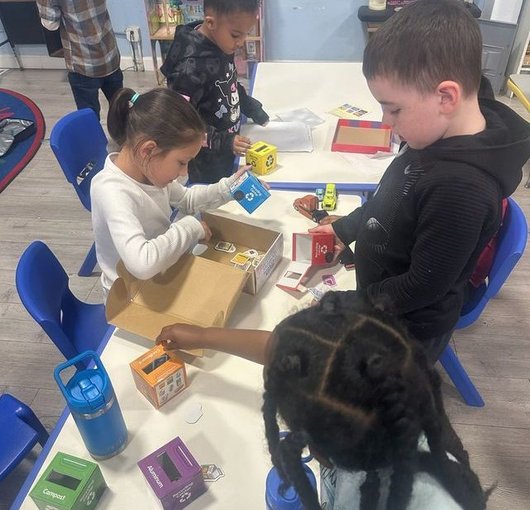
Bring your questions to Super Kidz Club in Concord, CA. We will show you our rooms and our teachers at work.
Tours typically take 30 minutes.